Forestry mulching vs land clearing: which one does your property need?
Forestry mulching grinds brush and small trees into chips right where they grew, leaving roots and soil intact. Conventional land clearing removes everything, roots included, and hauls it away. Mulching is the answer for overgrown land you want back. Clearing is the answer for ground you are about to build on.
That is the whole decision in two sentences, but the details decide real money, so here is the honest version we give on walk-throughs for both forestry mulching and land clearing jobs.
What actually happens in each method?
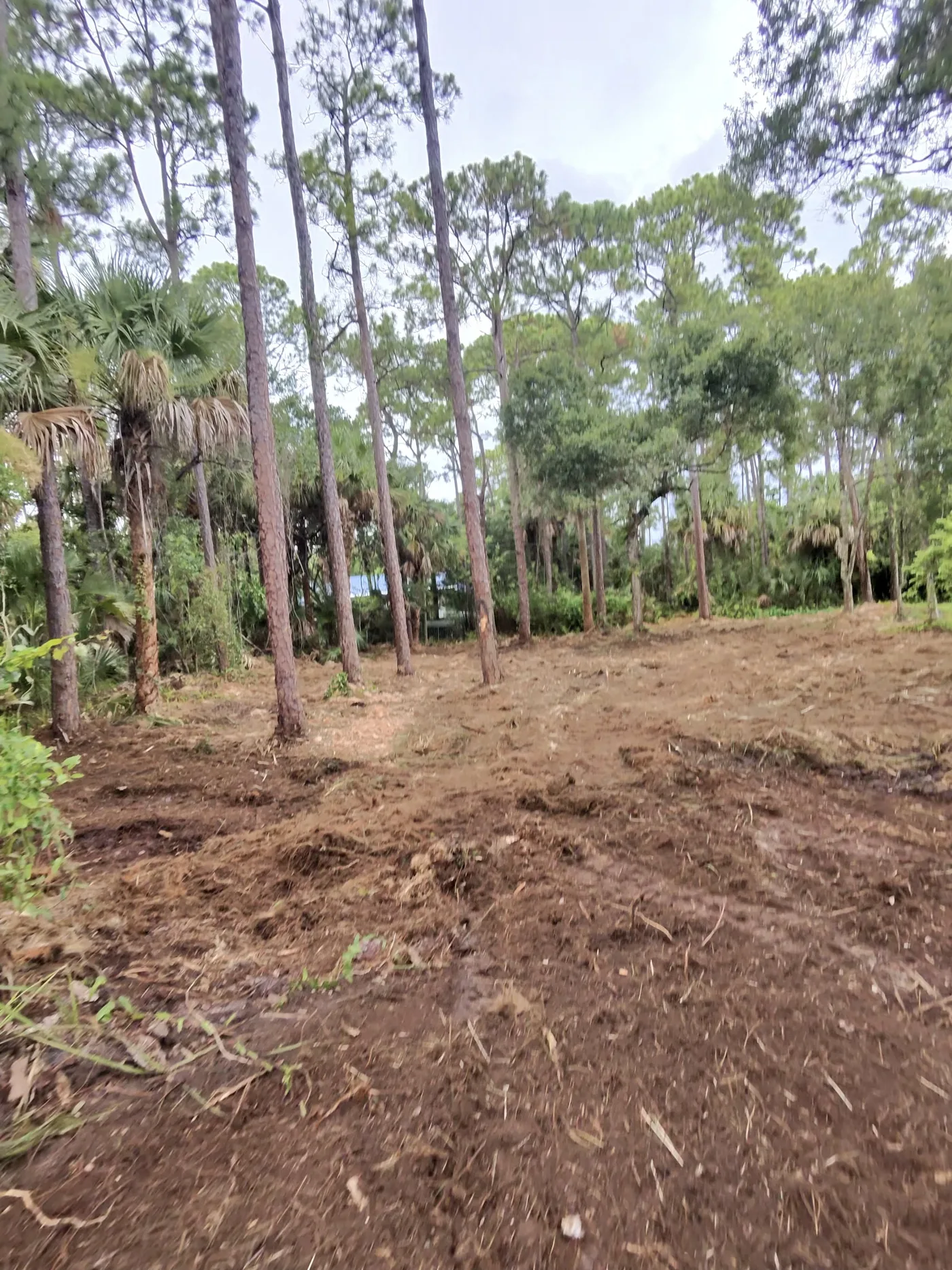
A mulching machine is a tracked skid steer with a grinding head. It moves through overgrowth, cuts brush, palmettos and trees up to around 5 inches, and turns all of it into a chip layer on the spot. Nothing is stacked, burned or trucked. The finished ground is walkable the same day, keeper trees stand clean, and the soil underneath never gets torn open.
Conventional clearing is excavator work. Machines rip vegetation out with the roots, stack it, and either burn it where that is allowed or load it into trucks. It leaves bare dirt, root holes and compaction, which is exactly right when a pad is coming, and exactly wrong when you just wanted your back five acres walkable again.
How do the two compare side by side?
| Forestry mulching | Conventional clearing | |
|---|---|---|
| Best for | Overgrowth, brush, habitat, maintenance | Construction sites, full resets |
| Debris | Ground into mulch, stays on site | Piled, burned or hauled away |
| Roots and stumps | Stay in place, or handled as separate scope | Removed |
| Soil | Intact, protected by chip layer | Disturbed, needs regrade |
| Same-day usable | Yes | No, grading follows |
| Typical 2026 cost | $1,000 – $2,500+ per acre | $2,500 – $6,000+ per acre |
| Neighborhood friendly | No smoke, no truck convoys | Trucks, sometimes burns |
The cost gap comes from disposal. Every guide prices excavator clearing above mulching for the same ground, because hauling debris is a whole second job stacked on the first.
When is mulching the right call?
When the goal is usable land rather than buildable dirt. Overgrown lots, palmetto floors under pines, pepper walls along fence lines, acreage you want opened for access, pasture or peace of mind. This describes most of the work on the Treasure Coast, including nearly every vacant platted lot in Port St. Lucie.
It is also the method of choice when neighbors are close. No burn piles, no smoke, no dump trucks down a residential street. The lot goes from jungle to park-like in a day and the street barely notices.
When do you genuinely need full clearing?
When the ground itself has a next job. House pads, barns, driveways and septic fields need roots out and grade set, and no mulching head does that. We are straight about this on estimates because we run skid steers, not excavators: for most residential lots and small acreage, skid-steer clearing is exactly the right tool, and when a job truly calls for the big iron, we say so instead of overselling ours.
The efficient plan on build sites is usually both methods in sequence. Mulch the whole parcel first so it can be surveyed and planned, then excavate only the footprint that needs it. You pay excavation rates on a fraction of the ground instead of all of it.
What about the stumps?
Mulching leaves them, ground low or standing, and that is fine for most land. Where a fence, drive or slab is coming, roots matter, and stump removal becomes its own line on the plan: pulled with the machine where the ground needs them gone, ground below grade where a mowable surface is the goal.
If you are still not sure which side of this your property lands on, that is what the free walk-through is for. Call or text (561) 308-9776, tell us what you want the land to do, and we will tell you honestly which method gets you there and what it should cost.