What size trees can a forestry mulcher handle?
A skid-steer forestry mulcher grinds trees comfortably up to about 4 to 6 inches in diameter. Bigger purpose-built carriers handle 8 to 12 inches, and beyond that trees get felled first and processed on the ground. Our machines mulch to about 5 inches, and we say so on every estimate.
That is the honest version of a question that gets fuzzy answers all over the internet. The size limit is real, it varies by machine, and knowing it protects you from both undersized crews and oversold promises. Here is how it actually breaks down for forestry mulching work.
Why does the machine decide the limit?
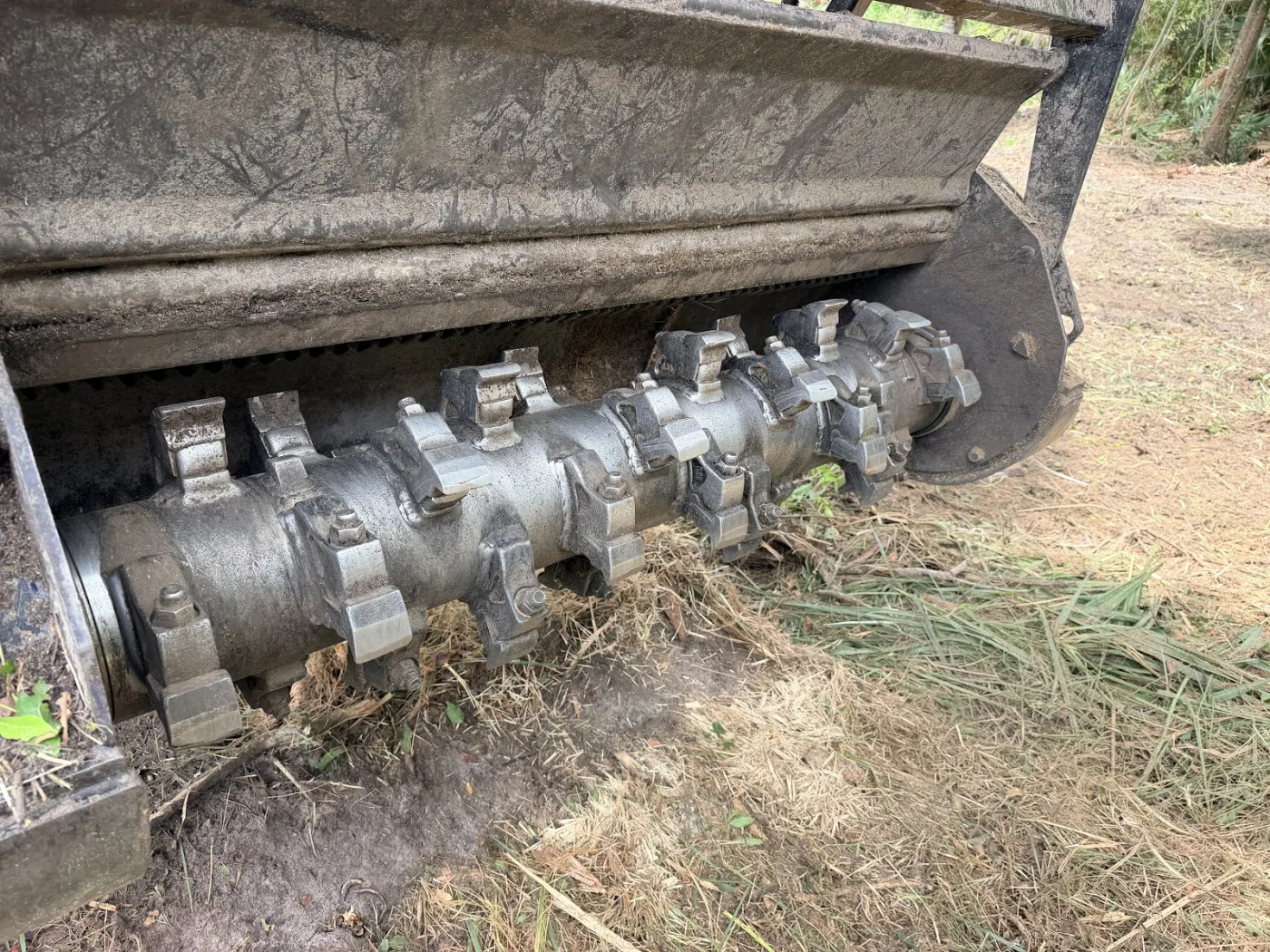
A mulching head is a drum of carbide teeth powered by the carrier’s hydraulics, and hydraulic horsepower is the whole story. A compact skid steer spins enough power to shred brush, palmetto and small trees continuously. Ask the same head to eat a standing 10-inch oak and it can, slowly, while fuel burns and teeth wear and the clock runs on your bill.
| Machine class | Comfortable range | What that means on your land |
|---|---|---|
| Compact skid steer + mulching head | Up to ~4–6” | Brush, palmetto, pepper, small trees, understory |
| High-flow tracked carriers | ~6–8” | Heavier thickets, larger stems, steady production |
| Dedicated forestry carriers | ~8–12” | Big acreage, heavy vegetation management |
| Anything, past its range | Fell first, then process | Chainsaw drops it, machine grinds tops and brush |
The ranges overlap because operators differ and so do trees. A soft 8-inch pine and an 8-inch oak are not the same meal.
What happens on a real property with mixed sizes?
The normal Treasure Coast parcel is exactly that: a palmetto and pepper floor, scattered mid-size growth, and a handful of genuinely big pines and oaks. The machine handles the floor and everything up to its range, which is usually 90-something percent of the stems on the property. The big keepers get flagged and stay, because selective mulching around good trees is the whole point of the method.
The in-between trees, too big to grind standing but not keepers, get cut and dropped, and the machine processes what it can while trunks are handled separately. On our jobs that decision happens on the walk-through, tree by tree, and customers have used us for exactly that combination of cutting and machine work. Anything beyond what our equipment honestly handles, we say out loud before the job, not after.
When is mulching the wrong tool entirely?
When the property is dominated by big timber, or when the ground itself needs to change. A parcel of mature 15-inch trees headed for a building pad is land clearing territory, with felling and heavier equipment in the plan. Mulching still often opens the ground first so the site can be surveyed, but nobody should sell you a skid steer as the whole answer to a timber job, and we will not.
For the standard overgrown lot or acreage around Fort Pierce, Port St. Lucie and the Treasure Coast, though, the 5-inch machine is precisely the right tool. What swallowed your land is not mature timber. It is palmetto, pepper, vine and fast small growth, and that is the exact diet a mulching head was built for.
How should you use this number when getting quotes?
Ask two questions of anyone quoting your land: what size trees does your machine mulch, and what happens to the ones bigger than that. A crew that answers with specific numbers and a per-tree plan is quoting your property. A crew that says their machine handles anything is quoting a fantasy, and the correction will show up mid-job as a change order.
Ours are on the table: mulching to about 5 inches, select bigger trees cut and handled as part of the plan, and a free walk-through where every tree on the property gets called what it is. Call or text (561) 308-9776 and we will look at what is actually growing on yours.