How much does land clearing cost per acre in Florida?
Land clearing in Florida runs roughly $700 to $2,500 per acre for light brush, $2,000 to $3,500 for medium growth, and $3,500 to $6,000 or more where heavy timber is involved. The Southeast usually prices 10 to 20 percent below national averages, and density moves your number far more than location does.
Those are market ranges from current national guides, not our rate card. Our land clearing quotes come from walking the actual property, but the brackets below will get your budget in the right place before anyone fires up a machine.
What does clearing cost by growth density?
Density is the honest way to price clearing, and it is how 2026 guides break it down:
| Growth level | What it looks like here | 2026 per-acre range |
|---|---|---|
| Light | Grass, vines, thin brush, scattered saplings | $700 – $2,500 |
| Medium | Palmetto floor, mixed brush, trees to ~5” | $2,000 – $3,500 |
| Heavy | Dense thicket, bigger trees, old pepper walls | $3,500 – $6,000+ |
One guide’s phrasing stuck with us because it is exactly right: an acre of medium clearing on flat Florida ground is a completely different job than the same acre on a rocky hillside somewhere else. Flat sandy ground is one of the few cost advantages Treasure Coast landowners get, so the local reality often sits toward the lower half of these ranges.
What does it cost to clear a small lot?
Per-acre math breaks down on platted lots. The machine costs the same to bring in for a quarter-acre as it does for a full day of acreage, so small lots carry a job minimum. National guides put half-acre projects around $1,000 to $1,400 and quarter-acre work below that, with density doing the rest.
Around here that matters because Port St. Lucie alone holds tens of thousands of quarter-acre lots, and clearing one is its own kind of job with its own pricing logic. We wrote a whole page on lot clearing for exactly that situation, including how we handle owners who live nowhere near their lot.
Which clearing method is cheapest?
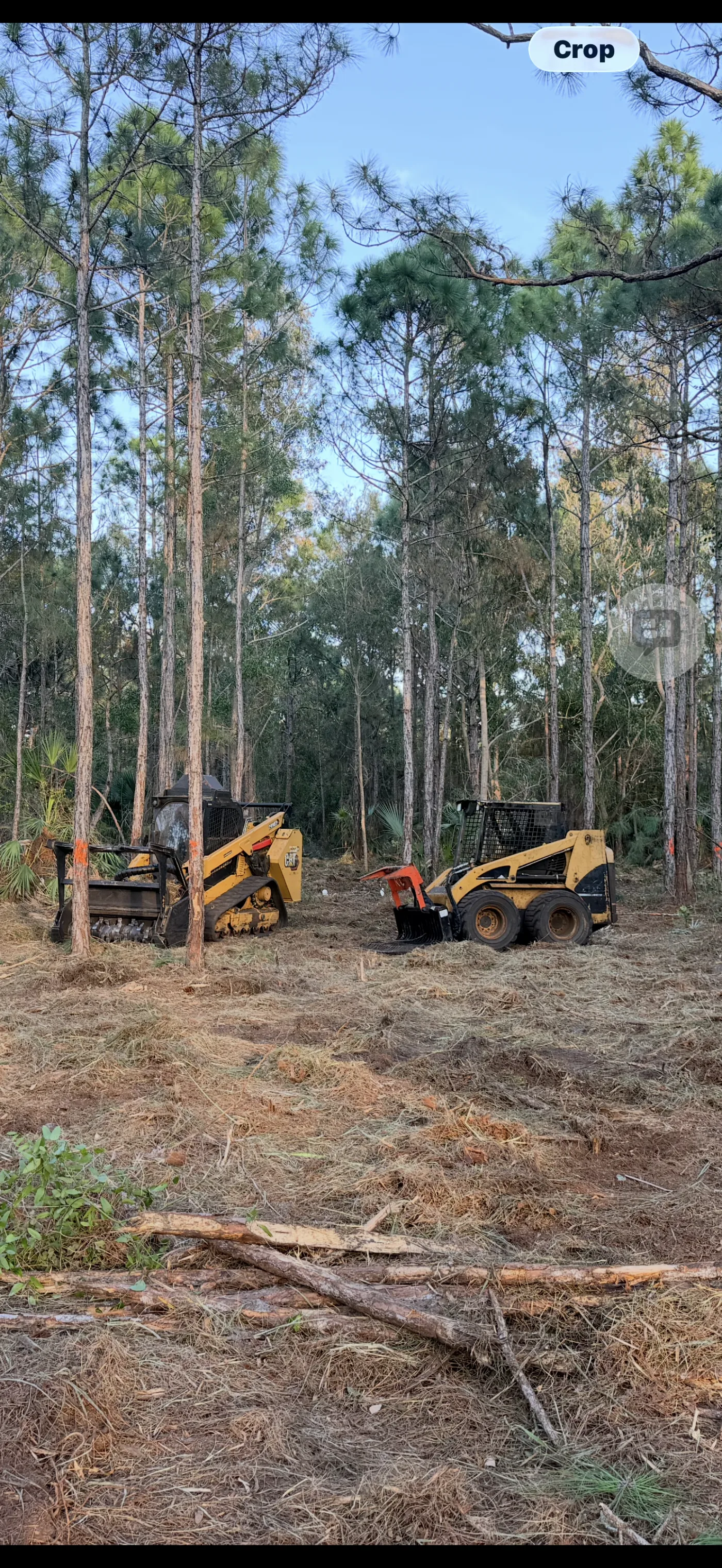
For most overgrown parcels, mulching wins on total cost because nothing leaves the property. Cut-and-haul clearing pays for trucks, dump fees and the labor to load them. Excavator clearing pays for all that plus ground repair. Mulching grinds the growth into chips where it stands, so those line items disappear.
The trade-off is what each method delivers. Mulching clears vegetation and leaves soil intact, which suits most residential and acreage work. Full excavation removes roots and prepares ground for construction, which some builds genuinely need. If you are not sure which your project calls for, read forestry mulching vs land clearing before collecting quotes, so you compare like with like.
What quietly adds to a clearing bill?
Four things, mostly. Stumps, if the plan needs them out rather than ground low. Access, when a machine has to work around structures, fences or soft ground. Disposal, on any method that hauls rather than mulches. And permits, where they apply: parts of St. Lucie County require a vegetation removal permit, and Port St. Lucie protects larger trees. We covered the local rules in our permit guide, because finding out mid-job is the expensive way to learn.
Season matters less than people expect, but wet ground slows machines down. If your land floods in summer, a dry-season clear usually runs smoother.
How do you get a real quote?
Give a contractor the address and let them look. On our jobs the walk-through settles what is growing, what stays, and what the finished ground should be, and the number we give is the number, unless the scope itself changes. That is a straight process, and it is free.
We clear land from Fort Pierce and Port St. Lucie up through Vero Beach and out to Okeechobee. Call or text (561) 308-9776 with the address, or start on the contact page, and we will get you a real number fast.